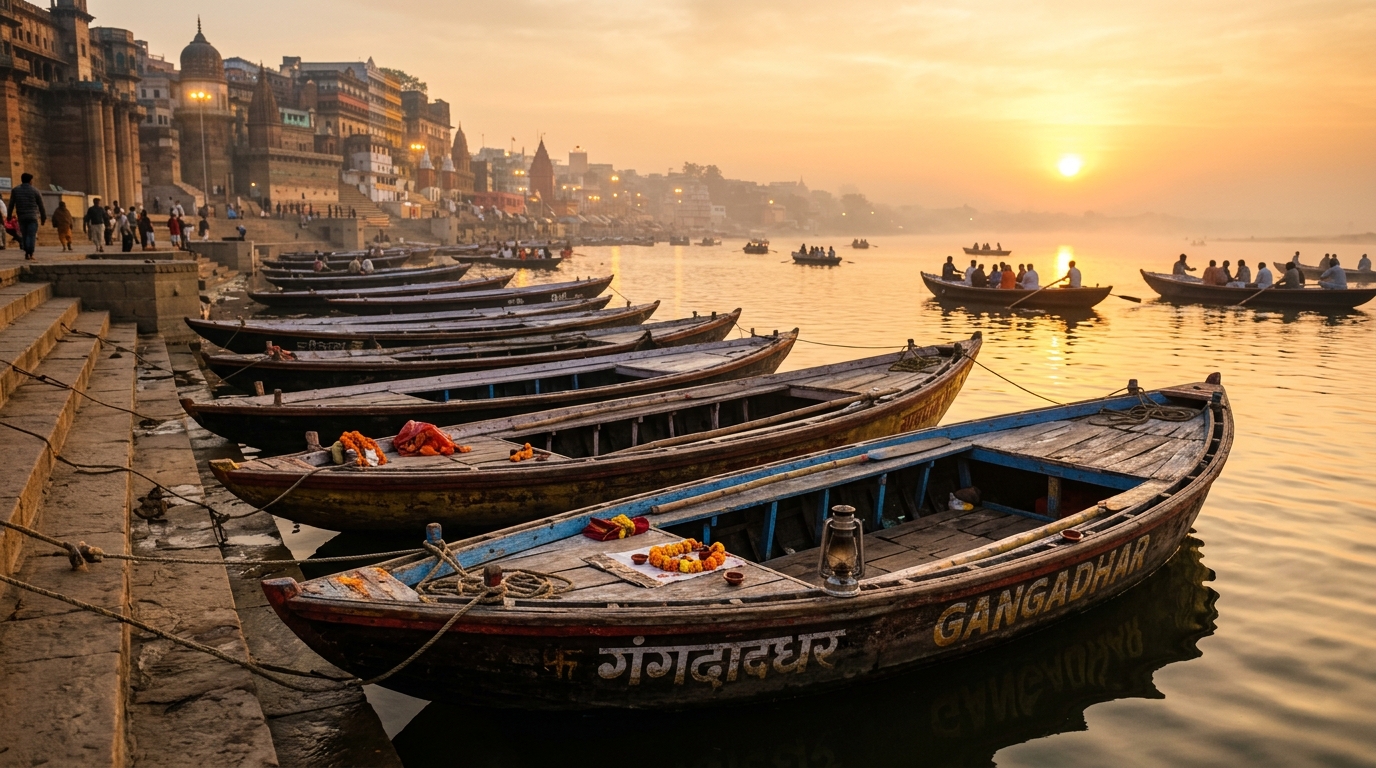
Sometimes the most memorable place to visit in Varanasi is a flight of stone steps beside the Ganga at dawn. Sometimes it is a narrow lane leading toward an ancient temple. Sometimes it is a peaceful Buddhist ruin in Sarnath, a vast green university campus filled with scholars, a sandstone fort across the river, or simply a quiet ghat where you sit for half an hour watching the holy river flow by.
That is why planning places to visit in Varanasi is fundamentally different from planning sightseeing in Jaipur, Delhi, or Agra. Here, attractions are not neatly separated from daily life. Kashi Vishwanath stands within a dense living neighbourhood; the ghats are simultaneously places of prayer, public discussion, and commerce; Manikarnika is an active cremation ground, not a historical relic; and Sarnath transports you from Hindu Kashi into one of Buddhism's supreme world landscapes.
Below is the structured, definitive list of the 20 places you should prioritise on a first trip to Kashi.
1. Shri Kashi Vishwanath Temple – The Spiritual Centre of Kashi
If you want to understand why Varanasi matters to millions of pilgrims, begin with Shri Kashi Vishwanath Temple. Dedicated to Lord Shiva, it is the devotional focus of the city and houses one of the sacred twelve Jyotirlingas. But a visit here is not ordinary sightseeing—you are entering an active sanctum receiving devotees from across the globe.
The 2021 Corridor directly links the temple to Lalita Ghat on the riverfront. Visitor Advice: Mobile phones, smartwatches, and leather belts are strictly prohibited. Utilize the free electronic lockers at Gate 4 (Chhatta Dwar) and allow 2 to 3 hours to explore the temple along with the nearby Annapurna Temple and Vishwanath Gali.
2. Dashashwamedh Ghat – The Classic Varanasi Riverfront
For many travellers, Dashashwamedh Ghat is where the Varanasi of their imagination becomes reality. Bustling with wooden boats, priests under bamboo umbrellas, and pilgrims taking holy dips, this ghat reaches its dramatic climax every dusk with the world-famous Evening Ganga Aarti. Reach by 5:15 PM in winter (5:45 PM in summer) to secure free step seating, or rent a seat on a moored wooden boat.
3. Assi Ghat – The Best Place for Sunrise & Morning Culture
If Dashashwamedh represents the evening spectacle, Assi Ghat reveals the city's serene morning personality. Located at the southern tip of the main riverfront, Assi hosts Subah-e-Banaras—a dawn program of Vedic yajnas, sunrise Ganga Aarti, classical morning ragas, and free public yoga. Unlike the narrow pedestrian lanes of Chowk, Assi offers direct road access for cabs and autos, making it an ideal base.
4. The Ghats of Varanasi – Explore More Than One
One of the biggest mistakes first-time visitors make is seeing Dashashwamedh and assuming they have "seen the ghats." The District administration lists 88 distinct ghats along the Ganga stretching across a magnificent 6 km crescent. From the colorful temple steps of Kedar Ghat to the palatial facades of Darbhanga and Man Mandir, each ghat has its own architectural identity. Walk a substantial stretch, then hire a boat to view the skyline from the river.
5. Manikarnika Ghat – A Place to Visit with Quiet Respect
Manikarnika Ghat is Hinduism's most sacred cremation ground, where funeral pyres have burned continuously for millennia based on the belief that dying in Kashi grants instant liberation (Moksha). Crucial Etiquette: Manikarnika is a place of profound family bereavement, not an amusement park. Never take photographs of funeral pyres or grieving relatives, maintain respectful silence, and avoid touts asking for firewood money.
6. Sarnath – Where Buddhism's Wheel of Dharma Began
Located just 10 km north of Varanasi, Sarnath is one of world Buddhism's four primary pilgrimage sites. Here in the Deer Park, Gautama Buddha delivered his momentous First Sermon (Dharmachakra Pravartana) after attaining enlightenment. The peaceful, manicured archaeological park features ancient monastery ruins, votive stupas, and Mulagandha Kuti Vihar. Allocate at least half a day for Sarnath.
7. Dhamek Stupa – The Towering Landmark of Sarnath
Within Sarnath, the colossal Dhamek Stupa commands reverence. Built around 500 CE on the exact spot where Buddha preached to his first five disciples, this cylindrical stone and brick monument stands 43.6 meters tall. The lower sandstone portion features exquisite geometric swastikas and delicate floral carvings from the classical Gupta period.
8. Sarnath Archaeological Museum – Home of India's National Emblem
Do not make the common mistake of visiting the ruins while skipping the Sarnath Museum. This air-conditioned archaeological treasure houses the world-famous 3rd-century BCE Ashokan Lion Capital—carved from polished Chunar sandstone, which was chosen as the official National Emblem of India. The museum also displays masterwork 5th-century Gupta sculptures of the preaching Buddha.
9. Banaras Hindu University (BHU) – The City of Learning
Founded in 1916 by Bharat Ratna Pandit Madan Mohan Malaviya, Banaras Hindu University spans 1,300 acres, forming one of Asia's largest residential universities. Shaded avenues, grand Indo-Saracenic buildings, and a vibrant student community provide a refreshing contrast to the ancient cobblestone alleys of old Kashi.
10. New Vishwanath Temple (Birla Temple) at BHU
Inside the BHU campus stands the New Vishwanath Temple. Envisioned by Pandit Malaviya and built by the Birla family, this magnificent white-and-red marble temple features a 77-meter-tall shikhara—one of the tallest temple towers in the world. Unlike ancient sanctums, its spacious halls welcome visitors of all castes, creeds, and backgrounds without restrictions.
11. Bharat Kala Bhavan – Rare Art & Archaeological Treasures
Located within BHU, Bharat Kala Bhavan is an acclaimed museum housing over 100,000 artefacts. Its galleries feature world-renowned collections of Mughal and Rajasthani miniature paintings, Gupta-period terracottas, ancient coinages, palm-leaf manuscripts, and historical Banarasi brocades and textiles. Perfect for an enriching midday cultural visit.
12. Sankat Mochan Hanuman Temple – Faith & Classical Music
Situated in southern Varanasi near Assi, Sankat Mochan Hanuman Temple was established in the 16th century by Goswami Tulsidas. Revered as the Reliever of Troubles, the open-courtyard temple is deeply cherished by locals, especially on Tuesdays and Saturdays. It is also famous for hosting the annual Sankat Mochan Sangeet Samaroh classical music festival.
13. Durga Kund Temple – The Historic Red Temple
Built in the 18th century in North Indian Nagara style, the ochre-red Durga Temple stands beside the historic Durga Kund reservoir. Dedicated to Goddess Durga in her fierce Chandika manifestation, it becomes an intense epicenter of worship during the nine days of Navratri.
14. Tulsi Manas Mandir – Where Literature Meets Devotion
Located near Durga Kund, Tulsi Manas Mandir was constructed in 1964 from pure white Makrana marble on the grounds where Tulsidas composed the Ramcharitmanas. The entire text of the epic Ramayana is carved into the interior walls, accompanied by charming moving mechanical dioramas illustrating scenes from Rama's life.
15. Ramnagar Fort – Royal Relics Across the Ganga
Perched on the eastern bank of the Ganga, Ramnagar Fort is the 18th-century sandstone palace of the Kashi Naresh (Maharaja of Varanasi). The fort museum features vintage American cars, silver palanquins, bejeweled elephant howdahs, antique swords, and an extraordinary 150-year-old astronomical clock that charts sun, moon, and astrological movements.
16. Bharat Mata Temple – A Unique Shrine to Mother India
Inaugurated by Mahatma Gandhi in 1936, Bharat Mata Temple houses no traditional idols of deities. Instead, it features an immense, mathematically precise relief map of undivided India carved out of Makrana marble, depicting mountains, rivers, and plateaus to scale.
17. Man Mandir Ghat & Observatory
Crowned by a majestic 1600 CE Rajput palace built by Raja Man Singh of Amber, Man Mandir Ghat features an open-air stone astronomical observatory (Jantar Mantar) built in 1710 by Sawai Jai Singh II. Viewing this grand multi-tiered palace from a riverboat offers one of the finest architectural vistas in Varanasi.
18. Namo Ghat – The Modern Riverfront Plaza
Representing Varanasi's 21st-century transformation, Namo Ghat in northern Varanasi is instantly recognizable by its monumental bronze sculptures of folded hands (Namaste). Offering open walking promenades, modern sanitation, EV boat charging, and floating CNG stations, it showcases how Kashi honours its antiquity while welcoming modern public spaces.
19. Rajghat & The Northern Confluence
Located near the confluence of the Varuna and Ganga rivers, Rajghat is Varanasi's ancient archaeological cradle, with excavations revealing settlements dating back to 800 BCE. Far removed from the crowded central ghats, Rajghat offers wide river vistas, tranquility, and a glimpse into early Vedic civilization.
20. The Old City Itself (Chowk & Vishwanath Gali)
The greatest place to visit in Varanasi has no admission ticket, no turnstiles, and no closing hours—it is the Old City itself. Wandering through the ancient, labyrinthine galis around Chowk, Thatheri Bazar, and Godowlia reveals a sensory feast of frying kachoris, brassware craftsmen, sweet paan shops, sacred cows, and centuries-old doorways.
How to Plan Varanasi by Geographic Clusters
Grouping your sightseeing into geographic zones eliminates backtracking and heavy traffic delays:
Old Kashi & Central Ghats
Kashi Vishwanath ➔ Annapurna Mandir ➔ Old Galis ➔ Dashashwamedh Ghat ➔ Man Mandir ➔ Lalita Ghat ➔ Manikarnika Ghat.
Best navigated entirely on foot.
Assi, BHU & Temples
Assi Ghat (Subah-e-Banaras) ➔ Tulsi Ghat ➔ Durga Kund ➔ Tulsi Manas ➔ Sankat Mochan ➔ BHU & Birla Temple.
Comfortable by auto-rickshaw or taxi; great for families.
Sarnath Buddhist Circuit
Dhamek Stupa ➔ Archaeological Ruins ➔ Sarnath Museum (Lion Capital) ➔ Mulagandha Kuti Vihar.
10 km north; book a dedicated auto or round-trip cab.
River Crossing & Forts
Ramnagar Fort (across river) ➔ Namo Ghat ➔ Rajghat ➔ Bharat Mata Temple.
Combine with an evening boat cruise or sunset view.
Frequently Asked Questions About Places to Visit in Varanasi
What are the most famous places to visit in Varanasi?+
The essential places are Kashi Vishwanath Temple, Dashashwamedh Ghat (Evening Aarti), Assi Ghat (Subah-e-Banaras), a sunrise boat ride, Sarnath, Banaras Hindu University (BHU), and the ancient old-city galis.
What is the number one place to visit in Varanasi?+
For pilgrims, Shri Kashi Vishwanath Temple is the primary devotional priority. For cultural travellers, witnessing the sacred Ganga at sunrise from Assi Ghat or a wooden boat is equally unmissable.
Is Sarnath worth visiting from Varanasi?+
Yes. Just 10 km from Varanasi, Sarnath is where Buddha delivered his first sermon. The 5th-century Dhamek Stupa and the original Ashokan Lion Capital make it a world-class archaeological site.
How many days are enough to see Varanasi?+
Two days covers the principal highlights (Vishwanath, Aarti, Boat Ride, Sarnath), while three full days allows for a relaxed itinerary with heritage food walks, silk weavers, and deeper ghat exploration.
Can I visit Varanasi with children and elderly parents?+
Yes. Balance dense old-city walking with open, easily accessible places like Assi Ghat, Sarnath, BHU campus, New Vishwanath Temple, and Tulsi Manas Mandir. Keep afternoons for rest.